
This Kuching bike and cook experience is interesting because it mixes two wheels with real food prep, not just sightseeing. You cycle out toward Malay kampongs along the Sarawak River, then you shift gears and cook like locals at Paradesa Borneo. Guides such as Ayra, Farhah, Aura, Kevin, and Dan are named in past group experiences, and the day’s tone is friendly and practical.
I love two things most: first, the chance to see rural Kuching only minutes from the city, through villages older than you might expect, with plenty of everyday sights. Second, the day ends with you learning Sarawak laksa chicken step-by-step after collecting some ingredients from a local market for a farm-to-table style meal. One possible drawback to factor in is that a few people felt the cooking portion did not match what the promotion seemed to suggest, so it’s worth going in with realistic expectations that it’s a class, not a staged food shoot.
Key highlights you will actually feel during the day
- Riverside villages close to town: You leave Kuching city life and pedal into Malay kampongs along the Sarawak River.
- Market ingredient collecting: You pick some ingredients yourself, then use them later in the cooking class.
- Hands-on Sarawak cooking: You chop, blend, and stir with the aim of cooking Sarawak laksa chicken at the end.
- A guide-led, small group flow: The tour caps at 15 travelers, with an English-speaking local guide.
- Weather ready: A raincoat is provided, so a bit of rain usually just means slower, wetter roads.
- More than snacks on a bike: Lunch, snacks, and bottled water are included, plus all food and drinks for the day.
Why this bike and cook day works better than a pure walking tour
A walking tour is great for the center of town. But if you want Kuching beyond the main roads, your feet hit a limit fast. This format changes the math. You get the speed of cycling, plus the time to stop, look, and take in how people live along the river edge.
What makes it click is the logic of the day. You start with sights that feel a bit away from the usual tourist rhythm, then you move into cuisine with context. The bike portion sets up what the food is connected to, since you visit places where common Sarawak ingredients come from and you collect some of them yourself. Then the cooking class turns that into a skill you can repeat later at home.
More bike tours in Kuching:
- Half-Day Heritage Bike Tour in Kuching
★ 5.0 · 162 reviews - Best of Kuching: Heritage & Kampong Bike Tour
★ 5.0 · 12 reviews - Half-Day Penang Countryside Cycling Tour
★ 4.5 · 454 reviews
Morning departure: cycling into Malay kampongs along the Sarawak River
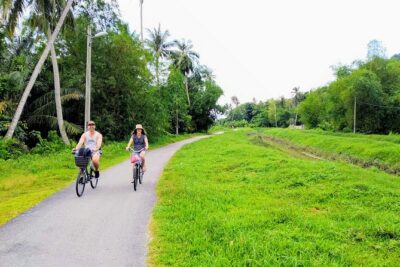
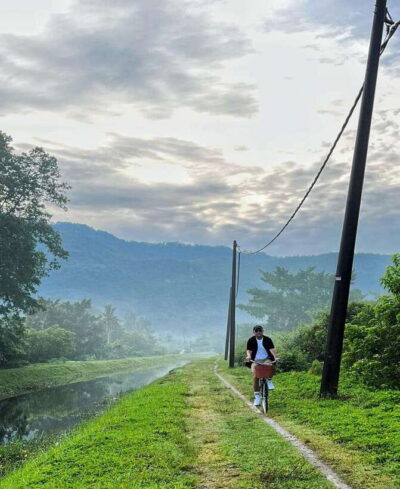
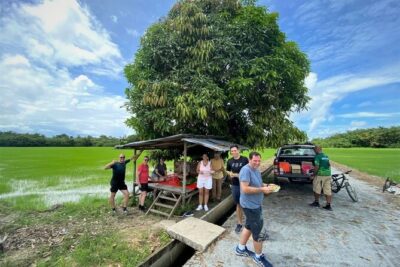
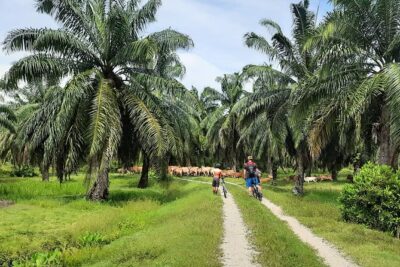
The day kicks off at 8:00 am and runs about 6 to 6.5 hours. After meeting in Kuching, you ride out from the city into the rural outskirts. The focus is Malay kampongs lining the banks of the Sarawak River. This is the part that feels most “local” because you see everyday streets and household life, not just curated sights.
You’re also not traveling far in a dramatic, remote way. The whole point is that these villages are only minutes from Kuching city center. That matters. It’s an easy way to compare two Kuchings in one morning: the busier urban feel you start with, and the slower river-side rhythm you reach by bike.
The ride itself is supported by the basics you need to enjoy the route. You’re provided a bike and helmet, and there’s also a raincoat included because Kuching weather can be unpredictable. And since this is traffic and road sharing territory, a good guide matters. Past group experiences have highlighted safe handling through traffic and clear guidance, with names like Kevin coming up for that kind of steady leadership.
The Paradesa Borneo stop: where the day shifts from roads to cooking stations
Your cooking class happens at Paradesa Borneo. In real terms, that means the day transitions from moving around to settling in and working with your hands. For many people, that shift is the best part because it changes the pace from “look and go” to “learn and do.”
The cooking portion is built around a Sarawak menu concept centered on Sarawak laksa chicken. The goal is not just to eat a dish, but to understand how it comes together. You chop, blend, and stir in a guided setting, so you come away with techniques you can use later, not only a memory of a single meal.
One caution based on past experiences: a small number of participants found the cooking portion disappointing and felt it didn’t align with what they expected from the way it was described. That doesn’t mean the class is bad, but it does mean you should mentally frame it as a real cooking lesson with a group format. In other words, you might not get the most personalized, one-person-at-a-station style of instruction. Still, multiple names connected to smooth, friendly guiding suggest the day’s human side usually lands well.
Market ingredient collecting: the closest thing to a farm-to-table moment
A big selling point is that you collect some ingredients from a local market for a farm-to-table style experience. Even if you never think you’ll cook Sarawak food at home, this part is valuable. Market shopping trains your eye. You learn what the ingredients look like, what forms they come in, and how they connect to the final dish.
It also makes the cooking lesson feel less random. Instead of being handed ingredients and told what to do, you’ve already chosen part of what you’ll use. That small act tends to stick. Later, when you cook, you remember the feel of that buying decision and how it tied into the taste.
And since the day runs in the morning, you’ll likely catch the market energy at a good time of day. One past experience mentions a morning wet market, and that tracks with the overall rhythm of the tour: ride out, then cook with what you gathered.
A few more Kuching options worth a look
- Night Froggy Adventure at Kubah National Park
★ 5.0 · 71 reviews - Semenggoh Orangutan Centre from Kuching
★ 4.5 · 53 reviews - Fun Filled Kayaking Adventure in Kuching
★ 5.0 · 40 reviews - Semenggoh Wildlife Centre Tour: Discover Sarawak’s Orangutans
★ 5.0 · 34 reviews
Understanding rural versus urban Kuching through food and daily life
This tour is not only a cooking class with a bike at the start. It is set up to create a contrast. You cycle through neighborhoods and river-side village areas, then you end up learning cuisine that reflects that region’s ingredients and flavors.
That rural versus urban comparison is where the value hides. In Kuching, it’s easy to assume your “cultural experience” is either city food halls or a single countryside detour. This day blends both in one flow. You see everyday life where many ingredients originate, then you cook a Sarawak classic tied to those flavors.
If you like connecting food to place, this structure pays off. You’ll probably come away with better instincts for what to look for when shopping later, and what to ask for when ordering laksa ingredients back home.
Cooking Sarawak laksa chicken: what you should expect to learn
The cooking class is built around Sarawak laksa chicken. The instruction style is hands-on, with a focus on the steps that shape flavor. You’ll be chopping, blending, and stirring like you’re part of the process, not just watching someone else work.
In a couple of past experiences, the class expanded beyond one dish, with participants describing cooking multiple items with locals and using a range of local products. The exact count can vary by group and class flow, but the consistent idea is that you learn more than one basic technique.
Here’s how I’d interpret the learning goal for you, practically:
- If you enjoy cooking and want a recipe plus technique, this should help.
- If you want a simple meal and zero kitchen work, you may feel it’s too active.
- If you’re new to Southeast Asian cooking, the step-by-step pace should still make sense, especially since the guide is local and English-speaking.
Lunch, snacks, and drinks: included means less stress, more time eating
Food is included and the tour lists lunch, snacks, and bottled water, plus all food and drinks. That’s a quiet but important point. It means you can focus on the ride and the class without juggling cash, timing, or where to find something you can eat.
Because the day is about taste and learning, the meal timing also matters. You’re not just buying lunch after the fact. You cook, then you eat. That connection helps the flavors make sense.
Also, since this is a group tour with a maximum of 15 travelers, the schedule tends to be tight enough that included meals reduce downtime. You’ll spend more of the six hours actively doing and eating, and less of it “waiting for the group to find lunch.”
Group size, guide style, and safety on the road
The tour runs with a maximum group size of 15 travelers. That’s small enough to feel like an actual day with a guide, not a mass shuffle. It can also help with pacing during both cycling and kitchen work.
Guide quality is a recurring theme in the past experiences tied to this activity. Names like Ayra and Aura show up for friendly energy and strong English skills, while Kevin appears for safe biking through traffic and for answering questions. Dan is also mentioned in another context, but the key takeaway for you is that you’re not relying on guesswork.
What this means for your comfort level: if you’re nervous around roads, the guide’s job is to keep the group moving safely. Even if you’re not an experienced cyclist, you’ll get a bike and helmet, and you’ll have a guide managing the flow.
Weather reality in Kuching: why the raincoat matters
Kuching can throw rain at you when you least want it. The tour includes a raincoat, so you are not stuck hunting for an umbrella at the last second. In one past experience, a guide was described as well prepared during pouring rain, and that fits the inclusion of rain gear.
Practical tip: treat rainy weather as slower biking time. Roads can get slippery, and you’ll want to keep a bit more distance from the people in front of you. The good news is the cooking part usually becomes even more pleasant when the weather outside is messy, because you’re warm, seated, and working with your hands.
Price and value: what $106.58 gets you for a half-day plus
At $106.58 per person, you’re paying for more than a bike ride. You’re getting:
- the bike and helmet,
- a local English-speaking guide,
- raincoat and bottled water,
- boat fees,
- the cooking class,
- lunch, snacks, and all food and drinks.
That mix is the value story. A standalone cooking class in most places can already cost a similar amount once you include ingredients and guide time. Here, you add the cycling segment and the market ingredient collecting concept, plus boat fees. In other words, you’re not paying solely for a kitchen session. You’re paying for the whole experience package from morning ride to food.
There is one nuance to keep in mind. Because the cooking portion has drawn a complaint about mismatch with expectations, I’d suggest you go in with a flexible mindset. If you want a very specific dish presentation or a highly detailed, photo-perfect class flow, any group-based reality could feel different. If you want a hands-on day that ties cuisine to place, this still tends to be worth it.
Who should book Kuching Bike and Cook
This tour fits best if you want a mix of activity and learning, and you like food that has a story behind it. It also suits you if you enjoy the idea of collecting ingredients first and then using them immediately.
You’ll probably enjoy it most if:
- you’re curious about Sarawak cuisine and want to cook Sarawak laksa chicken,
- you want to see rural Malay kampongs near the city by bike,
- you like getting an included meal rather than hunting for food between stops.
You might skip it if:
- you dislike hands-on cooking,
- you expect a strictly guided, private class with no group rotation,
- you are very sensitive to schedule or instructional style differences.
Should you book it? My take
I think this is a strong choice for visitors who want more than a checklist of Kuching sights. The bike route gives you a practical way to see everyday river-side life, and the market-to-cooking flow makes the food feel connected to the place. The included meals also reduce friction, so you can enjoy the day instead of planning it.
Just keep one mental note: cooking quality can be very guide and class-flow dependent in group formats. If you approach it as a hands-on learning day with real ingredients and real work, you’re likely to feel it was money well spent. If you’re looking for a highly polished, match-the-promo-style performance, you may feel let down.
FAQ
How long is the Kuching Bike and Cook tour?
It runs about 6 hours to 6 hours 30 minutes.
What time does the tour start?
The start time is 8:00 am.
Where does the tour meet, and where does it end?
You meet in Kuching, Sarawak, and the activity ends back at the meeting point.
What is included in the price?
The tour includes a local English-speaking guide, bike, helmet, boat fees, raincoat, cooking class, all food and drinks, lunch, snacks, and bottled water.
What is not included?
Hotel pickup and drop off are not included.
How many people are in a group?
The tour has a maximum of 15 travelers.
Are children allowed?
Children must be accompanied by an adult.
What language will the guide speak?
The guide is English-speaking.
Is free cancellation available?
Yes. You can cancel up to 24 hours in advance for a full refund.
Recently reviewed in Kuching
- Wonder Orangutan Sarawak Semenggoh Wildlife Centre Tour★ 5.0 · 7 reviews
- Semenggoh Wildlife Centre: Orangutan Discovery from Kuching★ 4.5 · 8 reviews
- Shared Mangrove & Irrawaddy Dolphin Watching Cruise★ 4.5 · 10 reviews
- Semenggoh Orangutan Center & Sarawak Cultural Village★ 4.5 · 10 reviews
- Sarawak Cultural Village Tour from Kuching★ 5.0 · 13 reviews
- Kubah’s Nocturnal Wonders Nighttime Frog Safari★ 5.0 · 13 reviews
- Bako National Park★ 4.5 · 18 reviews
- Semenggoh Wildlife Centre Tour: Discover Sarawak’s Orangutans★ 5.0 · 34 reviews
Cycling Tours, compared.
Penang George Town All-In-One Heritage Tour By Bicycle & Trishaw (Metro Bike)
Read our review →
Penang Countryside Cycling Tour. PPA2 by Matahari
Read our review →
Browse the lists this tour appears in