
Reviewed · WORKSHOPS
Batik Coloring Workshop by myBatik
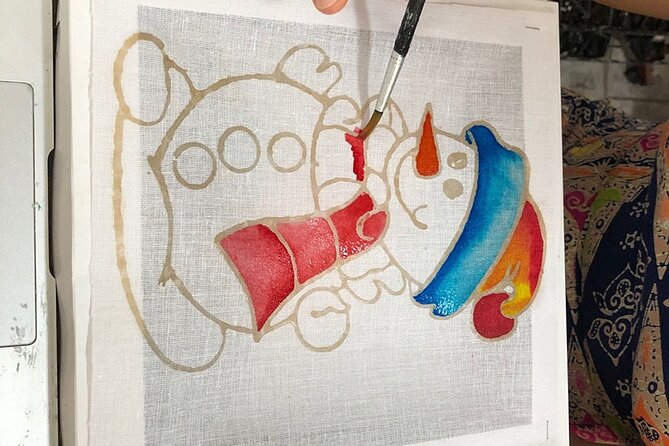
Batik coloring is one of those travel activities that feels both relaxing and surprisingly technical. You start with pre-waxed fabric, pick colors, and learn the wax-resist process that has shaped Malaysian batik for centuries. It is a hands-on way to understand Malaysian design, not just look at it.
I love how all materials are included so you can focus on painting, and I love that you get a real take-home piece you made yourself. One small consideration: you will need to plan your arrival within the studio hours, because the workshop last call is 1pm, and that timing matters if you want to squeeze it between other Kuala Lumpur plans.
If you get a patient instructor, this class can be a lot of fun. In one account, Emilia stood out for being warm, funny, and extremely patient, including taking photos and videos to help you remember the experience.
Key things to know before you paint
- Wax-resist batik basics, step by step, from pre-waxed fabric to color filling
- A take-home square cloth about 7.8 inches (20 cm) across
- All tools and materials included, with no hidden costs
- Classes run through the day, but workshop last call is 1pm
- Private group format, so it feels more relaxed than a big classroom
- Family-friendly, with children age 7 and up allowed with an adult
Entering the batik workshop in Kuala Lumpur, close to where you already are
This batik workshop is set up to be easy to fit into a Kuala Lumpur day. The studio is positioned for convenient access from the Twin Towers area and downtown attractions, and public transportation is nearby. Even if you are hopping between markets, temples, and cafés, this is the kind of activity where you can get your bearings fast because you know exactly what you are going to do.
The experience is also a good “culture plus craft” combo. Instead of only watching a demonstration, you are actually filling in colors and learning the logic behind the wax-resist technique. You come away understanding why certain lines and shapes hold their crisp boundaries after dyeing.
For value, the big win is simplicity: you pay one set price and everything needed is included. That matters in Kuala Lumpur, where many “hands-on” activities quietly add costs for materials or upgrades. Here, you can budget confidently, then just paint.
More batik workshops in Kuala Lumpur:
- Batu Caves & Malaysian Handicraft Tour: Pewter & Batik Experience
★ 4.5 · 316 reviews - Malaysian Batik Experience-Handkerchief
★ 5.0 · 37 reviews - Batik Bag Painting Workshop by myBatik
★ 5.0 · 35 reviews
How the MyBatik session flows, from start to finish
Your visit centers on the MyBatik workshop space. The workshop portion is roughly 30 to 40 minutes, and it is described as a 45-minute hands-on class, so think “under an hour” for the actual painting time. After that, you can enjoy time in the nearby on-site café area and batik gallery.
At the start, you go from undecided beginner to confident painter. You begin with undyed fabric that has been pre-waxed with a pattern. That pattern is the roadmap for your work. This is not a free-for-all design class where you invent everything from scratch. Instead, it is guided learning, which is great if you want results without frustration.
Then comes the core of the technique: you choose colors and fill them in. As you work, you follow the process from early steps to finishing touches so you understand what happens to the dye and why the wax matters. It is the kind of guided pacing that helps most people, even if you have never handled fabric dye before.
There is also a broader “learn about batik making” aspect to the visit. The experience is set so you can spend time at the center, with access to a gift shop and a café within the complex. If you like browsing after you create something, this setup works well.
Wax-resist batik, in plain terms, and how your colors behave
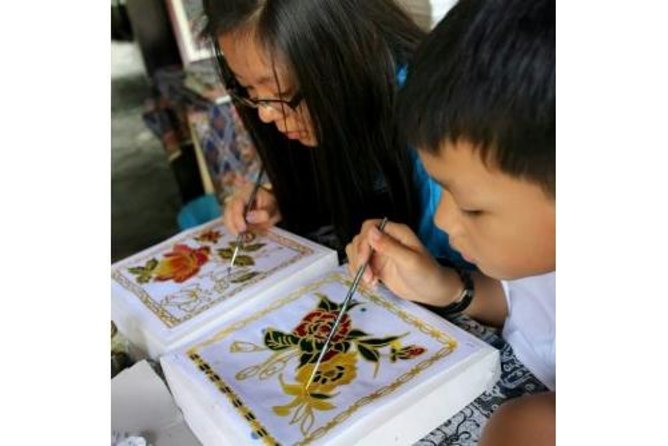
Traditional batik uses a technique often called wax-resist dying. In simple terms, wax acts like a barrier: dye follows the parts you let it reach, while wax-protected areas resist color. That is why batik ends up with the signature look of crisp lines and layered tones.
What I like about learning it in this workshop format is that you get to connect technique to outcome right away. You are not just coloring. You are making decisions that affect what the final fabric will show.
The workshop also gives you options with design and color. You can choose from different pre-set pattern designs, then select your palette. If you want to go a step further, you can practice mixing primary colors into secondary hues. That part is especially useful because it turns the workshop from a one-time craft into a small lesson you can apply again later.
One more practical detail: the instructors guide you as you fill in colors. That guidance is what keeps the class feeling relaxing rather than stressful. In an account of the experience, Emilia was described as very patient, even taking time for photos and videos, which suggests the teaching style is not rushed and not intimidating.
Choosing a pattern and making it yours, without the pressure
You pick a design, then you bring it to life with color. That combination is a sweet spot for many people. You get creative input, but you are not expected to invent an entire composition from scratch, and that helps first-timers.
For me, the best moment is when the fabric stops feeling like blank material and starts looking like a plan. Even with a pattern already placed, your color choices change the mood. Do you go bold? Go soft? Stick to traditional pairings or experiment with secondary hues? The workshop nudges you into making those choices.
Because the fabric is pre-waxed, the process is more controlled than dyeing from scratch. You can focus on what to color next and how you want tones to contrast. If you like structured creative activities, this fits that personality.
If you are traveling with kids or relatives, this structure is also a plus. It reduces “What now?” moments and gives everyone something concrete to do for the full session.
A few more Kuala Lumpur options worth a look
- Private Half-Day Batu Caves and Cutural Tour in Kuala Lumpur
★ 5.0 · 3,107 reviews - Sambal Streets Kuala Lumpur Food Tour with 15+ Tastings
★ 5.0 · 2,438 reviews - Historical Malacca Guided Day Tour (Shared Tour)
★ 5.0 · 2,172 reviews - Kuala Lumpur: Sambal Street Food Tour with 15+ Tastings
★ 4.9 · 1,657 reviews
Take home your batik square, size, and what to do next
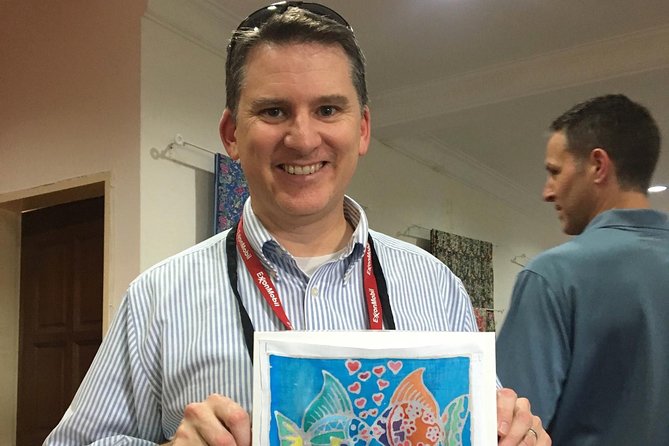
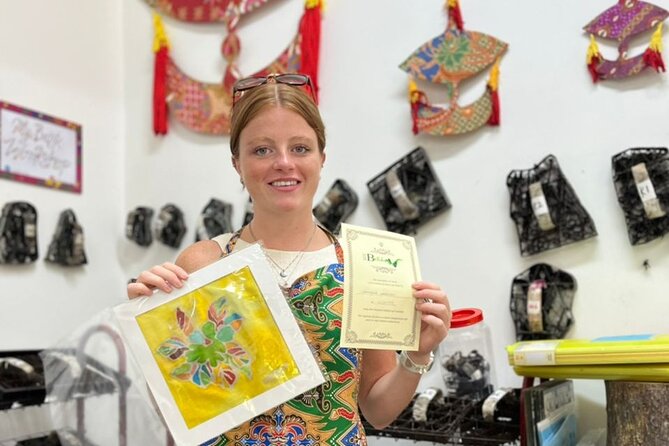
One of the most satisfying parts is that you leave with your own creation. After the workshop, you may take home a square cloth that is about 7.8 inches (20 cm) across. That is a practical size: big enough to feel meaningful, small enough to fit easily in luggage.
This is not just a souvenir you buy off a shelf. You are taking home evidence of the wax-resist process and your color choices. If you like gifts that are personal, this is a strong pick.
When you get back to your room, treat it like a craft item, not like a disposable product. You might want to keep it flat, avoid rubbing while it is still handling sensitive, and plan to display it or frame it later. The workshop itself gives you the “start to finish” experience, so you can connect what you did to the final look.
The café and batik gallery, why that extra time is worth it
Your experience does not end the moment you finish painting. Once the workshop part is done, you have access to a nearby garden café area and a batik gallery. That matters because it gives you a decompression window. You can sit, drink something, and reset your brain after concentrating on careful coloring.
The café also makes logistics easier. Food and drinks are not included in the workshop price, but having food nearby means you can stay without scrambling for dinner. For many people, that turns the class from a quick activity into a relaxed half of a day.
And the batik gallery is a nice bridge. You learn the technique in your hands, then you can look at batik designs in context. Even if you do not pick up a deep technical vocabulary, you start noticing how patterns, colors, and motifs work together.
Price and timing, and whether it fits your Kuala Lumpur plan
The price is $16 per person, and that is where this class becomes easy to justify. You are paying for instruction, workspace, and materials, and the cost includes all tools and supplies used in the workshop, plus local taxes. There are no hidden add-on fees listed for the creative materials.
Food is not included, and transportation to and from attractions is also not included. Still, because the activity itself is short, you can plan to grab food elsewhere or use the café on-site without needing a long schedule adjustment.
Timing is the other key value point. You can choose from classes throughout the day, and the studio runs from 8am to 3pm daily, including public holidays. The workshop last call is 1pm, so if you want the sure thing, plan to arrive earlier rather than later.
Duration works in your favor. With roughly 30 to 40 minutes (often described as 45 minutes) for the painting, you can fit this into a day that includes other downtown sights.
Who this suits best:
- Families looking for a hands-on activity that feels cultural and not boring
- Couples who want a shared “we made something” memory
- Solo travelers who like learning by doing
- Anyone who wants a short workshop without a big time commitment
Family-friendly and private-group comfort, with a practical age rule
This class is designed to be family-friendly. Children age 7 and above can participate, but they must be accompanied by an adult. That age threshold is helpful because it sets expectations for who the activity is built for.
The workshop is also private, meaning only your group participates. That typically makes the room feel calmer. You are less likely to feel like you are being rushed in front of a crowd, and it is easier to ask questions during the process.
Service animals are allowed too, which is good to know if you travel with one.
The real deal on instruction, from technique to patience
The quality of the instructor can make or break a hands-on class. The good news here is that the teaching style seems geared toward helping you finish with something you are proud of.
In at least one detailed account, Emilia was described as incredible, kind, warm, and funny, with the patience to take photos and videos while guiding people. Even if your guide is someone else, this points to an overall approach: clear guidance, enough time to work at a comfortable pace, and support for capturing the moment.
If you want to make the most of that, come ready to participate fully. Bring your phone or camera, and be ready to let the instructor guide you instead of trying to race ahead.
Should you book the Batik Coloring Workshop by myBatik?
Book it if you want a short, structured, hands-on cultural experience with real take-home value. At $16, with all materials included and a small finished cloth you can keep, it is easy to justify, especially if you are traveling with family or someone who likes crafts.
Skip it or think twice if you want a longer, deeper explanation of batik history beyond what fits inside a short workshop. This is about doing, not a multi-hour museum lecture. Also, if you tend to move slow in the morning, remember that workshop last call is 1pm and the studio closes at 3pm.
If you like practical creativity, wax-resist design, and leaving with something made by your own hands, this is a strong bet.
FAQ
How long does the batik coloring workshop take?
The workshop runs about 30 to 40 minutes, and it is also described as a 45-minute hands-on class.
Where is the meeting point?
The start point is Embun/Emery @ Kemensah, Jln Tiara Kemensah 3, 68000 Ampang, Selangor, Malaysia. The activity ends back at the meeting point.
What is the price per person?
The price is $16.00 per person.
What is included in the workshop fee?
All materials and tools needed for the workshop are included, along with local taxes. There are no hidden costs for supplies.
Is food included?
No. Food and drinks are not included in the price.
Can children join the workshop?
Yes. Children aged 7 and above must be accompanied by an adult.
What are the studio hours and last call time?
The workshop runs from 8am to 3pm daily, including public holidays. Workshop last call is 1pm.
Is this activity private?
Yes. It is a private tour or activity, and only your group will participate.
Can I cancel for a full refund?
Free cancellation is available. You can cancel up to 24 hours in advance for a full refund. If you cancel less than 24 hours before the start time, the amount paid is not refunded.
Recently reviewed in Kuala Lumpur
- Kuala Lumpur Night Tour★ 4.0 · 27 reviews
- Kuala Lumpur Full Day City Tour★ 3.5 · 27 reviews
- Half Day Cultural And Heritage Walking Tour in Kuala Lumpur★ 5.0 · 28 reviews
- Kuala Selangor Fireflies – Batu Caves Temple- Malawati Hill DayTour With Dinner★ 4.0 · 28 reviews
- KL Tower Admission Ticket with Private Pickup from Hotel★ 3.5 · 28 reviews
- Elevated Flavors: Dine 282m Above Ground at Kuala Lumpur Tower★ 3.5 · 28 reviews
- Port Klang Cruise Excursion To KL City Tour (Per Vehicle Price)★ 5.0 · 29 reviews
- Private Halfday Batu Caves and Cultural Tour in Kuala Lumpur *26*★ 5.0 · 29 reviews
Workshops, compared.
Penang Cooking Class:Dive into Malaysian Cuisine with PenangChiak
Read our review →
Chef Samuel’s Private Malaysian Cooking Class with Wet Market Tour
Read our review →

New Malaysian Kitchen Cooking Class and Garden Tour
Read our review →
Market Visit & Private Hands-on Cooking Class at Daun Senja
Read our review →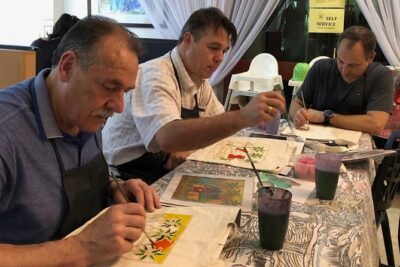
Browse the lists this tour appears in