
Reviewed · SARAWAK CULTURAL VILLAGE
Half-Day Mari Mari Cultural Village from Kota Kinabalu
This half-day outing is interesting because it turns a traditional Borneo village setup into a guided, walk-through learning experience, away from city life. I particularly like the open-air village layout and the hands-on demonstrations like blowpipe making and fire starting. The only drawback to watch for is time, four hours can feel quick if you want to linger deeply with every group.
What makes it practical is that you get hotel pickup and drop-off and a tight schedule that fits well into a busy Sabah itinerary. I also like the small-group feel, with a maximum of 15 people. If you are very sensitive to long drives, keep in mind this village is in the countryside.
You will learn about Sabah peoples including the Dusun, Rungus, Lundayeh, Bajau, and Murut, plus the everyday logic behind what you see. You will also get cultural context from your guide around the meaning behind practices like hunting tools, fire rituals, and body art. It is not just a show, it is built as a sequence of short stops, then demonstrations, then food.
Key highlights worth your attention
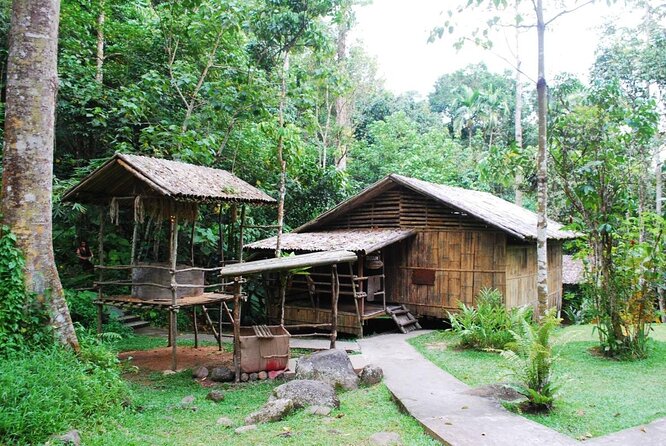
- Open-air cultural village setting outside Kota Kinabalu, designed for walk-through learning
- Multiple Sabah ethnic groups in one visit including Dusun, Rungus, Lundayeh, Bajau, and Murut
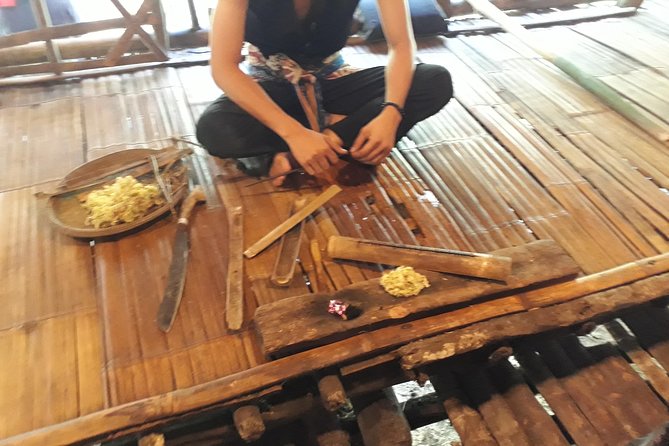
- Demonstrations you can watch closely with blowpipe making, fire starting, and tattooing
- Food included by session with buffet lunch for the 9 am session and hi tea for the 1 pm session
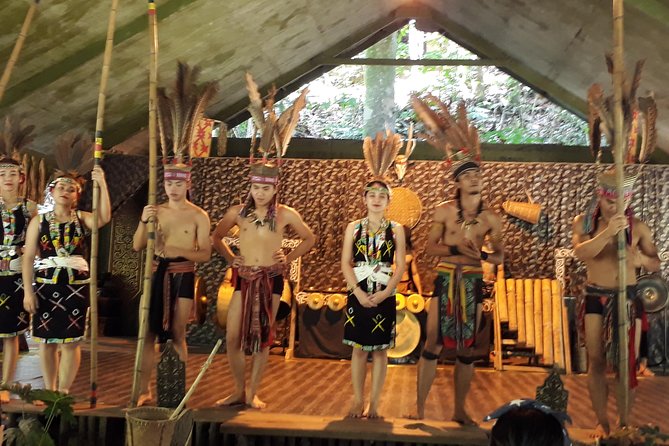
- Cultural dance performance included as part of the program
- Limited group size with a maximum of 15 travelers
A countryside open-air museum tour from Kota Kinabalu, in four hours
The Mari Mari Cultural Village tour is built to give you a compressed but coherent picture of Sabah ethnic life. Instead of driving around town and guessing, you go straight to an outdoor village museum set deep in the countryside, then follow a guided route.
The timing is straightforward. The tour runs about four hours, with multiple short stops (around 20 minutes each) that keep things moving. You also have included entertainment plus food, so you do not have to plan extra meals or scramble for tickets on the day.
This is a good format if you like structure. Each stop gives you a basic cultural snapshot, then you move on. The upside is that you see a lot. The potential downside is that you will not leave with the kind of detail you would get from a full day with one community or a longer stay.
More of the Sarawak Cultural Village:
- Kota Kinabalu: Mari Mari Cultural Village Tour with Lunch
★ 5.0 · 152 reviews - Mari-Mari Cultural Village Tour Including Lunch
★ 4.5 · 45 reviews - Sabah : Koisaan Cultural Village
★ 4.2 · 4 reviews
Entering the Mari Mari Cultural Village, then learning by walking stops
The first stop is the cultural village itself, where admission is included. This is your orientation. You get the feel of an open-air museum approach, meaning it is designed for observation in a real village-like setting rather than only indoor exhibits.
From there, the visit flows through themed areas focused on different groups. Each stop is short, but that is the point of the itinerary. You are meant to pick up cultural basics quickly, then compare how daily life, food habits, housing, and tools differ across groups.
A key detail I like about this structure is that it links culture to everyday needs. You are not only hearing stories about traditions, you are seeing how people historically adapted to environment and livelihood, paddy farming in some areas, hunting in others, and seafaring life for the Bajau.
The longhouse lesson: what you learn from Dusun, Rungus, and housing design
One of the more memorable sections is the one focused on the Kadazandusun and their farming roots. The tour explains that some communities traditionally cultivate wet paddy in coastal plains and valleys, while others in hills and further inland cultivate dry paddy. It is a simple concept, but it helps you understand why practices look the way they do.
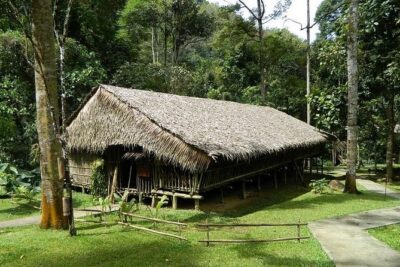
Then you get a Rungus longhouse view. You are shown how a traditional longhouse is made from wood, bamboo, and atap (palm leaves). More importantly, the tour talks about practical design choices like lifting the house to avoid flood and wildlife such as snakes. That kind of detail makes the architecture feel functional, not decorative.
If you like culture that is explained through how people lived, you will probably enjoy these stops. If you are hoping for a museum that reads like a textbook, you might find the pacing more conversational than scholarly.
Lundayeh and subsistence life: agriculture, hunting, and preserving food
The Lundayeh focus is centered on livelihood patterns. The tour describes the Lun Bawang as agriculturalists who also rear animals like poultry, pigs, and buffaloes. It also notes that they are known as hunters and fishermen.
The food angle matters here. The tour explains that meat and fish are brined or pickled using salt and stored for later. Even in a short stop, that information connects culture to survival logic, and it helps you understand why certain flavors and storage habits matter.
This part is also a reminder that cultural demonstrations in Sabah often connect to food, tools, and seasonal needs. You are not just learning about a past, you are seeing the practical reasons traditions were kept and refined.
More half-day options in Kota Kinabalu:
- Private Half-Day Batu Caves and Cutural Tour in Kuala Lumpur
★ 5.0 · 3,107 reviews - Kuala Lumpur Suburbs Batu Caves Half-Day Tour (SIC/Shared Tour)
★ 5.0 · 753 reviews - Half-Day Penang Countryside Cycling Tour
★ 4.5 · 454 reviews - Half-Day Geopark Cruise from Langkawi
★ 5.0 · 328 reviews
Bajau sea life and the Murut story, from seafarers to hunting traditions
The Bajau segment is framed around how westerners often hear about them as sea gypsies. The tour clarifies that the Bajau include two distinct groups, east coast Bajau and west coast Bajau, and that the west coast Bajau have more settled patterns compared to their seafaring origins.
This is one of those moments where a short explanation can correct misconceptions. Instead of one stereotype, you get a hint that there are regional differences and varied ways of living.
Then the Murut portion brings in a different thread. The tour explains that the Murut were the last ethnic group in Sabah to renounce headhunting. It also covers their shifting cultivation for hill paddy and tapioca, with diet supplemented by blowpipe hunting and fishing. You also learn that practices like blowpipe hunting were part of daily survival rather than only a dramatic cultural symbol.
It is heavy material in a short time. I recommend you go into this stop ready to learn the context, not just take photos. If your goal is understanding, you will leave with clearer perspective on why hunting tools and body markings show up where they do.
Demonstrations you can watch closely: blowpipes, fire starting, and tattooing
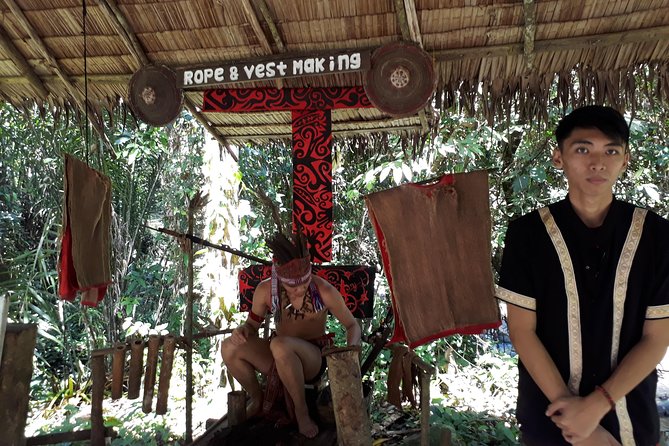
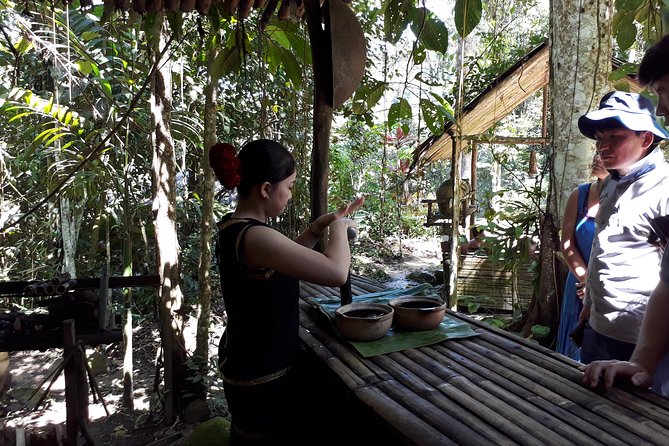
The tour’s signature energy comes from the cultural demonstrations. You see blowpipe making, fire starting, and tattooing, with your guide explaining the symbolism behind the practices.
Why this matters for you: tools and rituals make more sense when someone walks you through what each step does. Watching blowpipe related craftsmanship is one thing. Hearing the meaning behind it, and seeing how it connects to hunting and survival, is another.
Fire starting can feel like a simple trick until you think about what it represents in everyday life: making heat and cooking possible in a way that is reliable and understood by the community. That is the point. The tour is designed to connect technique to cultural value.
Tattooing is also treated as symbolism, not shock value. The tour frames tattooing as meaningful, and your guide’s explanation helps you avoid turning it into a tourist gimmick.
Note: the demonstrations are part of a half-day schedule, so they are structured and time-limited. If you want slow, detailed instruction, you may wish you had more time. If you are happy with guided viewing and explanations, you will likely consider this a highlight.
Food timing in Sabah: buffet lunch and hi tea that keep the day moving
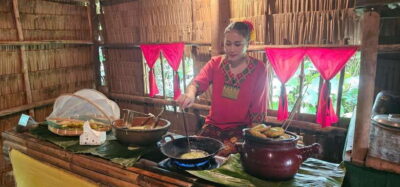
Food is not an afterthought on this tour. The smell of bamboo cooking comes before lunch, which sets a strong local rhythm right when you are ready for a break.
Your included meal depends on the session. For the 9 am session, you get a buffet lunch. For the 1 pm session, you get hi tea instead. Either way, the meal is baked into the route, so you do not waste time searching for restaurants after the demonstrations.
This is also where value shows up. $90 is not cheap, but you are not only paying for entry. You are paying for transport plus a guided cultural route plus a scheduled meal and a cultural dance performance.
Practical tip: eat at the start of your meal if you can. The day is timed tightly, and when the cultural program moves, it tends to keep moving.
Cultural dance performance: entertainment with context, not filler
A live Borneo cultural dance performance is included. I like that it is placed as part of the overall experience rather than a separate add-on. It gives you a change of pace after the learning stops and before the final stretch.
Dance performances can sometimes feel generic on tours, but here the timing and framing are designed to keep the day coherent. You are already learning about cultural practices, so the dance becomes another lens on identity and tradition.
If you are not a dance person, still give it your attention. Even if you do not love choreography, the costumes and pacing can add meaning to the earlier stops.
Price and value: is $90 fair for a half-day in the countryside?
At $90 per person, this is a mid-range to upper-priced half-day tour for Kota Kinabalu. The justification is that the ticket bundles in several real costs: hotel pickup and drop-off, air-conditioned transport, admission to the village, a guide, demonstrations, a cultural dance performance, and an included meal depending on your session.
If you try to recreate this independently, you would likely pay separately for transport out to the countryside, entry fees, and a guide who can explain the symbolism behind what you see. That is where the value comes from: you are paying for guided interpretation plus the logistics.
Who this price tends to work for:
- You want a structured introduction to multiple Sabah groups in one sitting.
- You prefer not to rent a car or coordinate multiple stops.
- You want cultural demonstrations and an included meal.
Who might hesitate:
- If you already have transport and a guide plan for deeper communities on your own schedule, this could feel like a quick sampler.
- If you expect long, museum-style reading time at each stop, the four-hour format will feel short.
Logistics: pickup, small groups, and session timing that matters
The tour includes hotel pickup and drop-off from Kota Kinabalu. Transport is handled in an air-conditioned minivan for groups of 6 pax and above, or by Innova for 5 pax and below. That matters if you want comfort on the ride, and it also means the tour adjusts its vehicle size based on group numbers.
The group size is capped at 15 travelers. That helps keep the experience from turning into a crowded conveyor belt, and it usually makes questions easier for your guide.
If you are a cruise passenger, pay close attention to the start times. The morning session starts at 10.00am, and the afternoon session starts at 2.00pm. This is important because a half-day schedule only works if you do not cut it too close.
From the reviews, I also picked up a practical pattern: the driver and park staff can handle time constraints better than you might expect if you communicate your situation early. If you have a short port window, tell your driver directly and confirm the plan before you head into the village.
Guide names show up too. One response mentions guide Sam, another mentions Joe. You may not get either person, but it is a hint that the operator values a friendly, capable guide who can explain things clearly.
Is Mari Mari right for you? A practical decision guide
Book this tour if you want a guided, high-clarity introduction to Sabah ethnic cultures in a compact time window. The mix of longhouse and farming context, plus blowpipe making, fire starting, and tattooing symbolism, gives you more than a passive walk. Add the included dance performance and meal, and it becomes a full half-day plan.
Skip it, or at least lower expectations, if you want deep academic depth or hours of unhurried time at one focus area. This is designed for breadth within a short schedule.
It can also be a great option for people who feel unsure about what to do outside Kota Kinabalu. The pickup, admission, and route take decision fatigue off your plate.
If you are traveling with mixed interests, this usually works because the itinerary touches architecture, food, tools, and performance. The only real risk is that four hours means you will move on before your curiosity runs out. If you accept that tradeoff, you should feel satisfied with what you pack into your day.
FAQ
How long does the Mari Mari Cultural Village tour last?
The tour is about 4 hours.
Is hotel pickup and drop-off included from Kota Kinabalu?
Yes. Hotel pickup and drop-off are included from Kota Kinabalu.
What food is included on the tour?
For the 9 am session, a buffet lunch is included. For the 1 pm session, hi tea is included.
Which cultures do you learn about during the stops?
You learn about the Dusun, Rungus, Lundayeh, Bajau, and Murut cultures.
Do the demonstrations include blowpipe making and fire starting?
Yes. You can see cultural demonstrations including blowpipe making and fire starting. Tattooing is also part of the demonstrations.
What time do the sessions start for cruise passengers?
Morning session starts at 10.00am, and afternoon session starts at 2.00pm.
What is the cancellation policy if I cancel within 24 hours?
You can cancel up to 24 hours in advance for a full refund. If you cancel less than 24 hours before the experience start time, the amount paid is not refunded.
Recently reviewed in Kota Kinabalu
- Join us for a RAID Try Dive in Kota Kinabalu★ 5.0 · 27 reviews
- Sabah: Kota Kinabalu Park and Hot Spring Day Trip★ 4.4 · 29 reviews
- Kota Kinabalu ATV Riding and Dairy Farm at Mountain Kinabalu★ 4.0 · 29 reviews
- Fun Boat Snorkeling and Island Visit from Kota Kinabalu★ 4.5 · 35 reviews
- Kundasang : Poring Hot Spring + Desa & Meal Shared Tour★ 3.6 · 35 reviews
- Kota Kinabalu Leisure Scuba Diving Trip (3 Dives)★ 5.0 · 41 reviews
- RAID Try-Dive Experience in Kota Kinabalu★ 5.0 · 43 reviews
- Proboscis Monkey and Fireflies River Cruise★ 4.0 · 51 reviews
Sarawak Cultural Village, compared.
Browse the lists this tour appears in